

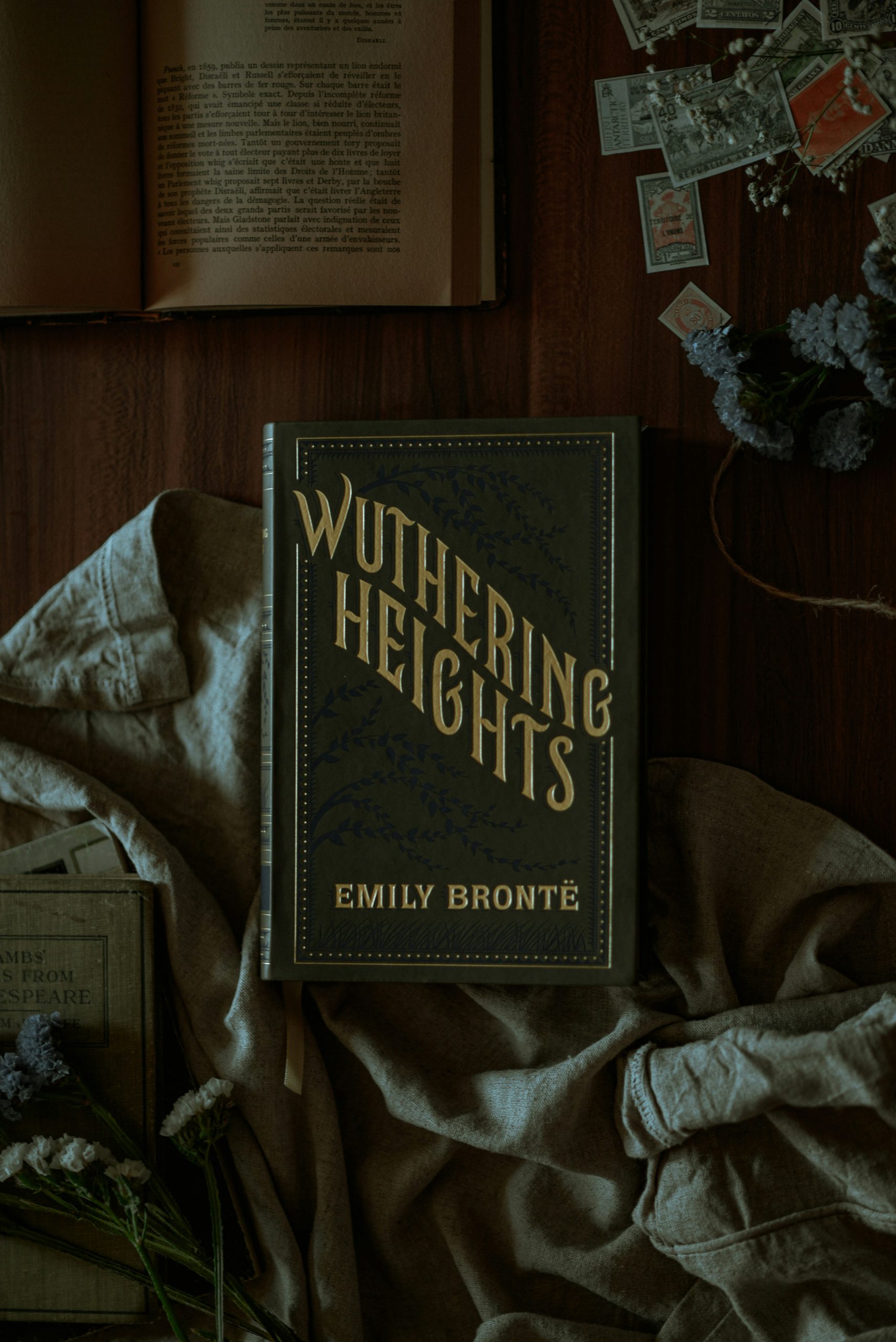
I am sure you have heard the discourse surrounding Emerald Fennell’s now infamous, “Wuthering Heights”: ‘As a fan of the novel I could never enjoy this film,’ ‘This film is a disgrace to Emily Brontë,’ and so on. Dr Claire O’Callaghan, literary scholar and Senior Lecturer in English at Loughborough University, is one of the most qualified people to address these concerns. Claire specialises in the Brontës, being Editor-In-Chief of the official journal of the Brontë Society and even publishing an extensive biography of Emily Brontë herself, Emily Brontë Reappraised. It is safe to say that Dr O’Callaghan is far more than simply a fan of the novel, she is an expert, and here is what she had to say.
Upon viewing the film immediately on the Friday morning of its release, Dr O’Callaghan detailed her initial reaction, ‘I just couldn’t stop laughing’, stating that her overall opinion of the film was that it was extremely entertaining and refreshing in comparison to the myriads of bad adaptations of the novel that exist. Talking of the film’s striking opening sequence, O’Callaghan stated that ‘it was just so tongue in cheek, setting the tone for the whole film’ being a ‘visual feast for the eyes’ that she was still processing when I came to speak to her the following Wednesday after the films release.
One of the most divisive elements surrounding Fennell’s adaptation is the issue of casting. Dr O’Callaghan stated, ‘I have read and written about a million spin offs of ‘Wuthering Heights’, I don’t take them in this very pure way that people seem to, particularly with the Brontës…people get very protective over it and their Cathy and Heathcliff is the only Cathy and Heathcliff…I went in with a really open mind.’ Despite this open mindedness, on the issues of race surrounding the casting of Heathcliff, Claire stated that she can definitely see why people are upset, ‘In the book he is described by and large ambiguously but as a person of colour, that is what the commonality is between the descriptions of him.’ Claire suggested that the public reaction to the casting of Heathcliff is reflective of the time in which we are living and she agrees that there have not been enough diverse representations of Heathcliff on screen.
On the widely shared viewpoint that Fennell’s film disgraces Emily Brontë herself, Claire stated that she believes that making that comment in and of itself is slightly disrespectful taking Emily’s name in vain due to one’s own dislike of a film adaptation. O’Callaghan, also being a scholar of the Victorians more broadly, suggested that one of the reasons for people’s strong reactions towards the adaptation is people’s views of the Victorian era as strictly puritan even though elements like what is included in Fennell’s adaptation were encoded within the original work.
On the more provocative elements of the film, Claire stated that the fish scene was the only thing that made her feel sick, all the rest between Cathy and Heathcliff got repetitive, however getting to listen to the Charlie XCX soundtrack overlayed in the background made it all worth it. To conclude on her opinions surrounding the strong reactions to this adaptation, Claire stated, ‘It’s a kind of echo…of how horrified the Victorians were about this book…there’s a complete correlation between what we are seeing now and what we were seeing then and that’s what is fascinating.’
Another topic that fans of the novel have been divided by is the representation and different interpretation of such beloved characters. Claire remarked on Isabella’s characterisation, ‘Isabella was interesting…I have got some research that’s not published…on representations of Isabella on screen…she has always been presented as this naïve character…Fennell does this…’ however she also stated that she ‘kind of liked the fact that Fennell gave agency to Isabella…it was really different…I was left a bit like, I’m not sure what to think here’. On the character of Cathy, Claire approved of Margot Robbie’s performance stating that ‘she really brought out the kind of brat like Cathy.’ The main issue that O’Callaghan shared surrounding the film was to do with the characterisation of Heathcliff, ‘The only thing I didn’t like about this film is that we are told in the book that Heathcliff is a man who will love and hate in equal measure, his emotional engine is grief, misery and sorrow but I felt that in the film he was a bit more of a romantic…that’s less interesting than something a bit more emotionally complex’. Claire also stated that so many adaptations cut off the second part of the book as well as moving around and condensing characters, ‘I think it’s really hard to adapt a complex, layered book like ‘Wuthering Heights’, it moves about in time… it’s hard to do that.’ She went on to suggest that ‘Wuthering Heights’ is full of ‘competing plotlines and ambiguity … with screen, adaptation can’t deal with ambiguity, it has to disambiguate,’ this being the reason for many of Fennell’s choices to condense elements of the novel.
Overall, Dr Claire O’Callaghan shared a viewpoint that I myself am inclined to agree with, ‘If you’re going to do an adaptation…you can’t just keep doing the same thing…this is hopefully opening up a whole new world of readers to that book…take it with a pinch of salt and just enjoy the madness for a couple of hours.’
