

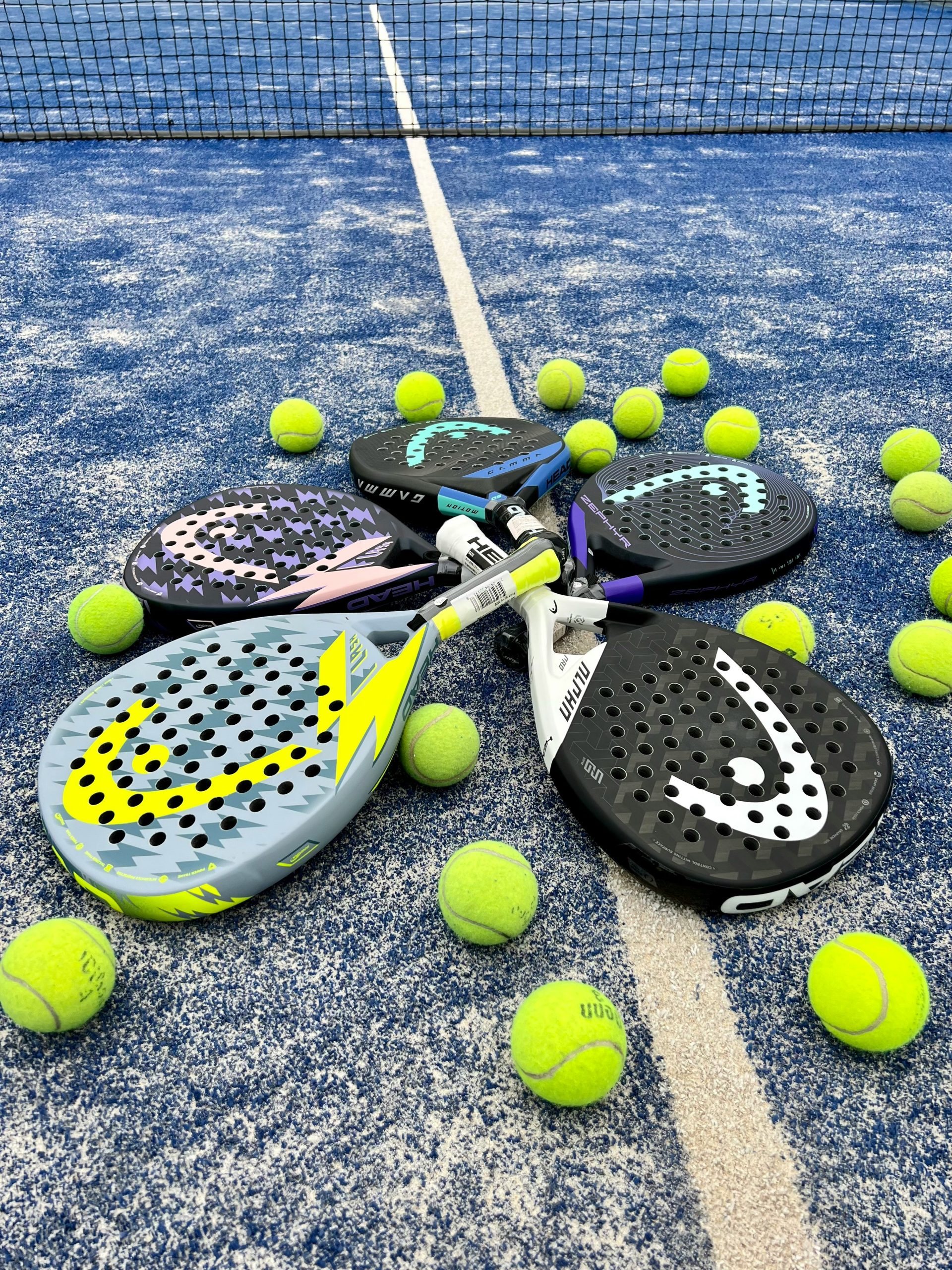
Last year, my father initiated a business idea with a friend. Their plan was to open an indoor padel centre. They sought to take advantage of a rapidly expanding market and a sport in high demand, inspired by a broad trend of padel courts opening all over the place.
Originating in Mexico, popularised in Spain, padel has broken through to become the fastest growing sport in the UK, it is argued the whole world.
This is hardly surprising: padel is such an enjoyable and easy sport.
The game itself is played within a glass rectangle about half the size of a tennis court. With a forgiving fibreglass ‘bat’ about the size of a tennis racket, but thicker and with a much shorter handle, players slap, push, or scoop the ball over the net. In fact, that’s the game: you hit the ball over the net, simple as.
It is scored like tennis. You can play three sets within ninety minutes. The ball must bounce before it hits a wall, but you can hit a ball against a wall to return it over the net. Like tennis, you only have one bounce, but it can hit the wall an unlimited number of times. To be in, the serve (which is done underarm) must land inside the opposite service box and hit the glass, not the mesh. Those are the rules.
Yet, there is no specialised technique like padel’s cousin tennis. There is no relentless running beyond the odd sprint to catch a ball that is difficult to return. This is one of the key benefits: it is a chill game. (However, I would advise players not to expect to stand completely still on court because you need to get the optimum distance from the ball – two to three feet on each wing – which requires a small amount of footwork.) That you play in doubles means you do half the work.
Many proponents have said it’s exercising without realising: constant low-intensity moving around raises your heart rate without getting you out of breath and actively improves your tracking and spatial awareness skills. Ball sport players outperform their non-playing counterparts in spatial and cognitive tasks.
The doubles feature also creates a social aspect: my aunt, for example, plays every weekend with my uncle and two of their friends, which has created a fantastic friendship – and rivalry – between them (my aunt and uncle play on separate teams!).
Padel also gets you outdoors; fresh air on a miserable winter’s day can be no harm and with the availability of indoor and covered courts, this means you do not need to brace the cold or the rain. Despite being a relaxed game, it still is complicated enough to be played seriously, competitively, and with meaningful skill development.
When we were discussing padel recently, a friend commented, ‘Padel will be the next fad and lots of the courts springing up will be derelict in a few years’. I disagreed.
To use my father’s response, this is ‘unlikely given what happened in Spain and Sweden’, where padel has surpassed tennis is overall participation. Courts are appearing everywhere, so, though my father and his friend decided not to proceed with their project, there is padel for everyone.
I would thoroughly recommend playing because, if for nothing else, it is really fun.
Credits: Banner from Unsplash & edited by Frankie Russell
