

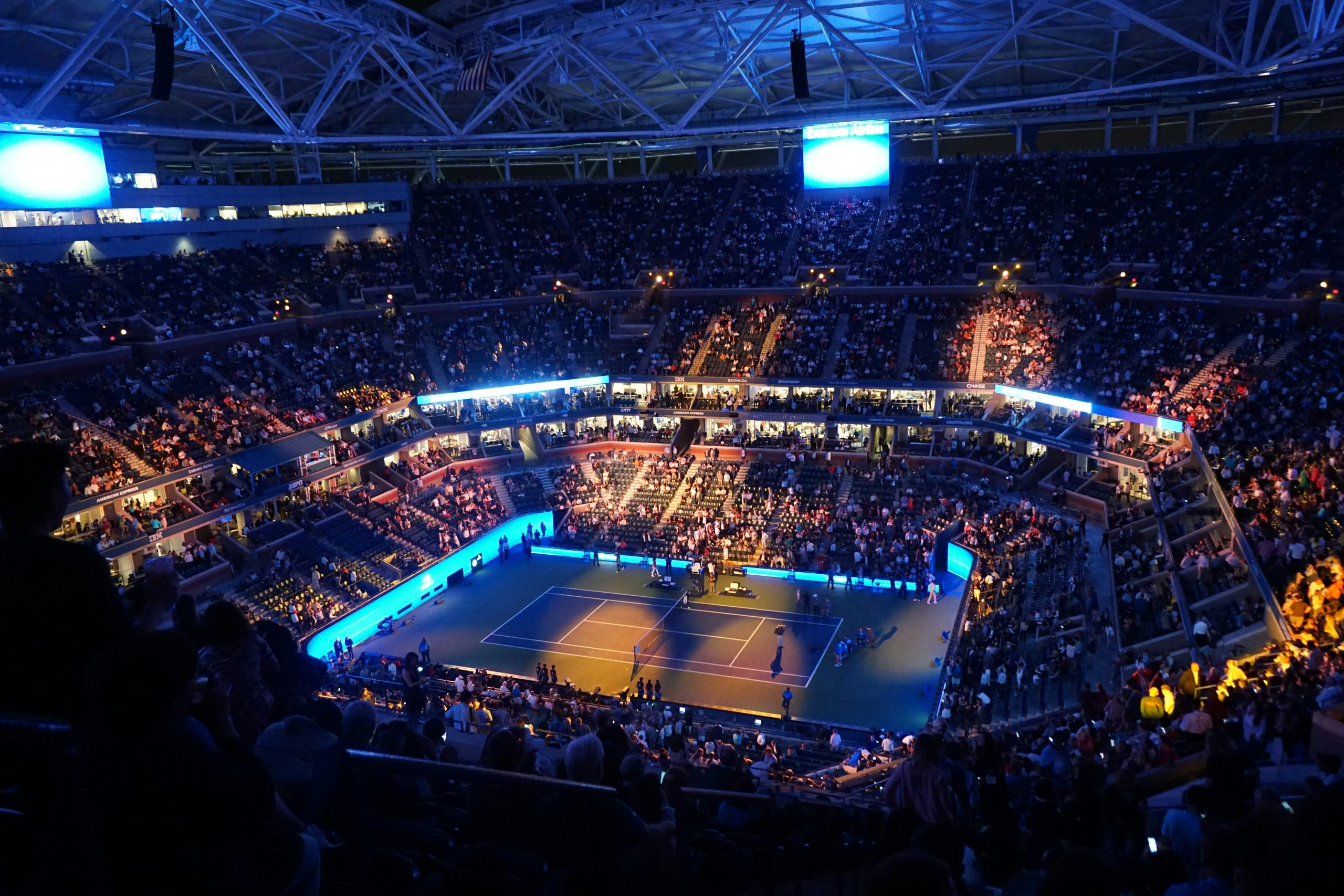
The 2026 tennis calendar has reached its conclusion. A season full of twists and uncertainties culminated in the WTA Finals at Indian Wells (7th-14th November) for the women, and ATP Finals in Turin (15th-22nd November) for the men.
With the reigning singles champions Elena Rybakina and Jannik Sinner medically sidelined, and both lineups containing just 3 combatants from the previous year’s edition, everyone had something to prove. So let’s break down the singles and doubles for the two events, which with such an influx in newer talent were destined to be turbulent.
Indeed, Rybakina’s injury absence from the top 8 meant nobody really knew what to expect heading into the Finals. Aryna Sabalenka (28) was signing off an underwhelming season by her standards, not picking up a slam for the first time in 4 years, yet entered the Finals as the top seed and was still chasing her first trophy at the event. Coco Gauff (22) was the second seed and had won the Finals in 2024. It came as a complete shock then to see both players crash out in the group stage, leaving the competition wide open.
In stepped Mirra Andreeva at just 19 years old, the champion at Roland Garros and third seed for the event. She stormed through all her matches in straight sets to complete an astounding charge to the title. The teenage Russian beat out 3-time finalist and veteran Elina Svitolina (32) to become the youngest singles champion since 2004.
Meanwhile, the doubles provided its own fairytale ending, as Kateřina Siniaková and Taylor Townsend (both 30) claimed their first WTA Finals win, rounding off a superb season that saw them complete the career Grand Slam with the US Open title. Overcoming the Italian Errani/Paolini pairing in the final was no mean feat, having narrowly lost to them earlier in groups.
While the women’s game found itself a new teenage champ, the men’s game has its own generational talent adding to his already stellar collection. 2026 provided a very different season to 2025, which had seen domination across the board from Sinner (25) and one Carlos Alcaraz (23), both of whom spent extended periods out injured this year. Capitalising on this was Alexander Zverev (29), who seized his chances to pick up his first two Grand Slams on the road to securing World No.1. Despite this, his notably poor record against Sincaraz this season left narratives swirling around whether he could really lay claim to his third ATP Finals title with Alcaraz back in the fray.
Ultimately the pressure of this very buildup appeared too much, and Alcaraz proved his return to fitness with a masterful level of tennis to beat the German in straight sets. This added a debut Finals victory to the career grand slam he had already accumulated, making the Spaniard’s list of achievements frankly incredible, particularly for his age.
The men’s doubles saw French pair Théo Arribagé (26) and Albano Olivetti (34) construct a surprise run of their own, beating out several of the top contenders, including going down to the wire against the well-established Arevalo/Pavic pairing in the final to seize the title in their breakthrough season.
Let’s look then to the implications for the wider sport. I can say with some confidence that we’ve entered a new era of the men’s game; Alcaraz and Sinner at such an early stage in their careers have become defining names in men’s tennis. In the years following ‘The Big Three’, there were many questions surrounding the future of the sport. It seems those questions have answers.
For a while, fans looked to Zverev’s generation, including the likes of Medvedev, Rublev and Fritz, who have reached lofty heights in their own respect. However, the Sincaraz dominance is impossible to ignore, alongside an outpour of fresh faces on the block. Fils, Shelton, Jodar and Cobolli were all present in Turin, all 24 and under. Young stars are making statements and winning the biggest tournaments, no longer simply challenging the established names.
In women’s tennis, Andreeva has wasted no time making an impact herself, joining the abundant crop of young players looking to make their mark early doors. While Rybakina (27) has looked to take a grip on the game, the sport hasn’t looked this competitive in some time, with the likes of Sabalenka and Gauff refusing to let up themselves. Heading into 2027, the number of potential champions sets the stage for another thrilling year to come.
While unconventional compared to usual proceedings, 2026 has delivered plenty of exciting tennis. The Finals were a great showcase for how upcoming talent will shake things up, but also how established names continue to ensure fierce competition themselves.
If there’s one thing that this year has taught us, it’s that the future of the sport is in very safe, albeit youthful, hands.
Credits: Banner from Unsplash & edited by Frankie Russell
