
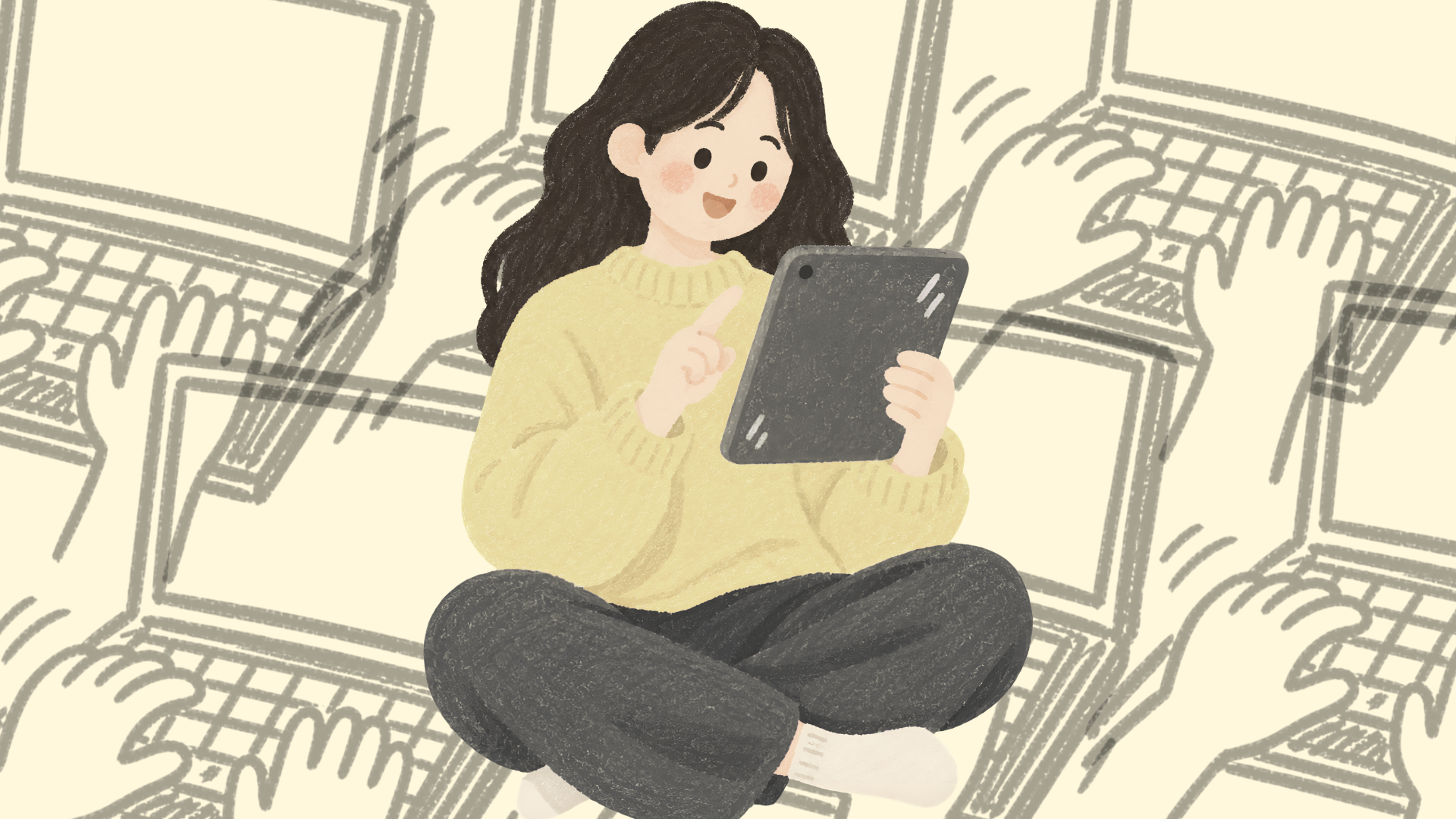
Is your feed plastered with the same looking buttery yellow typography placed on top of images saying things such as ‘first in my bloodline to…’ or ‘kinda chic to…’?
The same one-liners are being recycled by creators, fuelling our feeds with very similar looking ‘performative’ content which the algorithm prefers to show to a mass audience, leaving individual and niche content to hide behind.
Is this a problem, and if it isn’t, when does it become one?
Google searches for ‘performative’ increased throughout the year of 2025, according to Lauren Cochrane, as the word was paired with others such as the ‘performative male’ referring to one who insincerely adopts trends aesthetics in order to seek romantic attention and appeal from women.
There’s, of course, a performative nature that’s inherent to how social media is designed, which makes it difficult when discussing performativity online, as isn’t that the whole point?
I went to Italy with a friend over the summer and visited the very beautiful and ‘Instagram worthy’ Lake Como. We were determined to go to the iconic Gates Of Heaven in the botanical gardens of Hotel Villa Cipressi in Varenna, where every influencer has got a photo of themselves at. We got there at 9am, and queued for around half an hour for our two minute ‘picture slot’. I remember saying to my friend at the time how performative and dystopian I felt waiting in a queue to take pictures of a gate revealing out to Italian water and mountains.
Although we are not influencers, did we still upload a curated Instagram post of our Italy trip, yes. But, we are also both media and communication students here at Loughborough who were aware of how performative our posts were, while having fun curating it.
In Breakdowns & Breakthrough’s blog, the author discusses Jia Tolention’s essay “The I in the Internet” which highlights the idea that performativity becomes a problem when our identities become wrapped up in that online performance. Social media is used to connect with others and we are not only interacting and connecting with the world through this confined box of performativity, but that our performance is based on our digital ecosystem, the algorithms and capitalism. Therefore, the performance is no longer our own, and it belongs to something abstract instead.
Substack writer J’Nae Philipps believes the rise in peformativity reflects a “cultural shift in meta-awareness”, not only are people posting, but they are analysing and calculating everyone else’s posts. People are now increasingly skeptical on what is authentic and what is not online.
In this world where AI-infused algorithms exist and the same posts are gathering on our feed, Cambridge Dictionary have just released their word of the year for 2026, which is human, due to its recent natural linguistic shift denoting that something has not been made from AI or is ‘AI slop’, the word ‘human’ thus celebrates and appreciates the natural human touch.
Performativity itself isn’t necessarily the villain here or anything we should judge people, as we all perform in a lot of aspects of our lives.
What you can take from this however, is to be aware of the kind of content you’re consuming and the abstract powers such that of algorithms and capitalism that construct the type of things you see. And as Cambridge Dictionary states, be human and go against the grain, engage in community-centric concepts, express and research your own unexpected obsession and interact with real life, human content and people. But, post that performative Instagram post of your Italy trip if you like, we’ll all be liking it and supporting you.
