

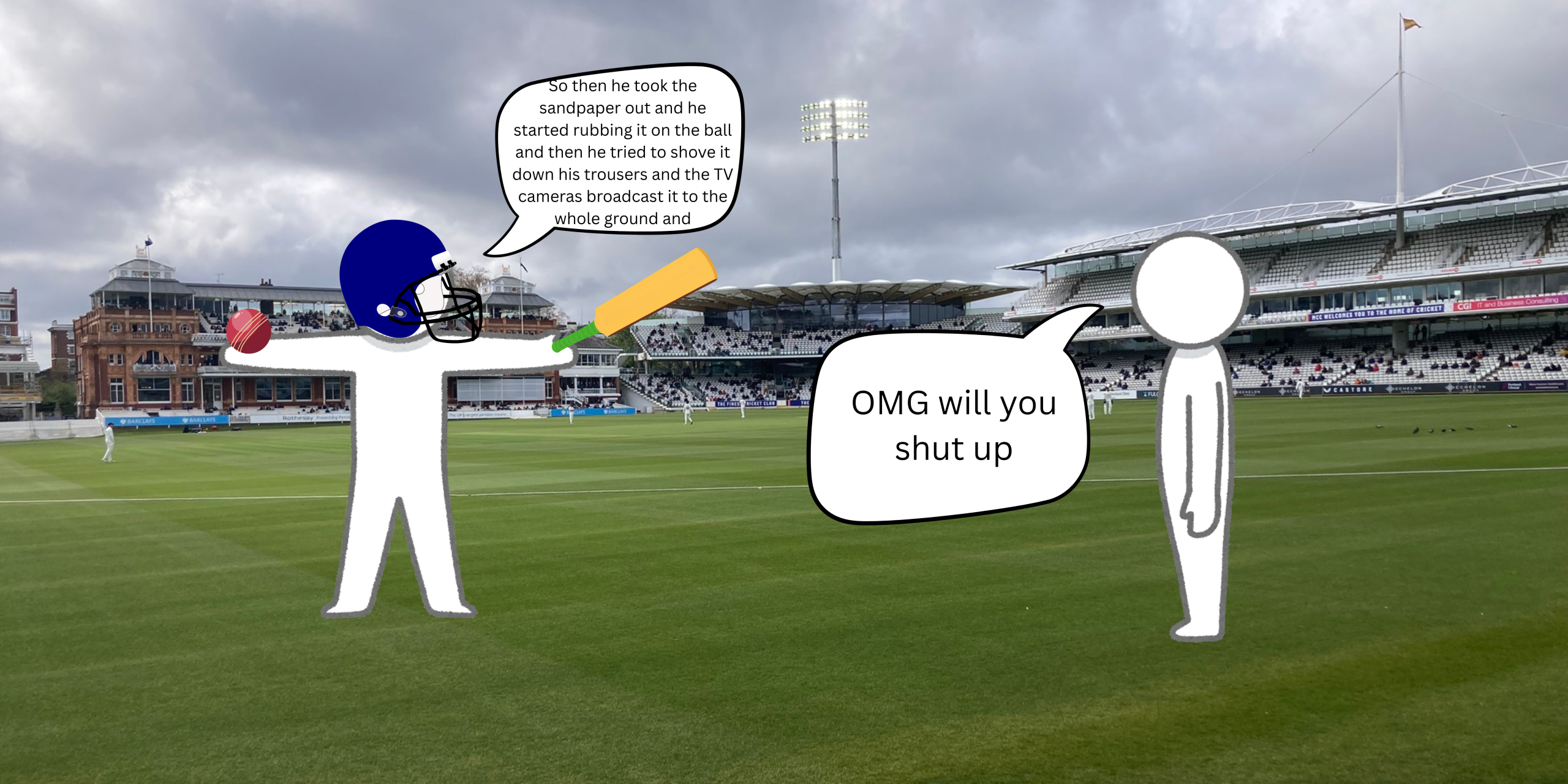
If you’re a fan of Australia, cricket or hot gossip, there’s a chance you’ve heard the word “sandpaper” floating about this week. For those who aren’t quite so locked into cricket drama, what on earth is Sandpapergate?
Eight years ago, the Australian men’s cricket team were caught cheating on TV. Two weeks ago, Usman Khawaja – a recently retired member of that team – brought the whole controversy back to the surface with some scathing accusations in his new book. Cue Sandpapergate 2.
Let’s head back to Cape Town in March 2018. In the third Test against South Africa, Australian Cameron Bancroft is caught on camera shoving sandpaper down his trousers.
“Okay, odd move,” you’re thinking. “Who cares?”
In cricket – particularly Test cricket – a lot hinges on the state of the ball. Bowlers can deceive batters by getting the ball to move differently. One type of movement is swing, where the ball curves sideways in flight. A shiny new ball can swing conventionally, but what we care about here is reverse swing: when a ball is kept shiny on one side and rough on the other, it moves towards the shiny side, often dramatically and late.
In search of this holy reverse swing, cricketers have always done weird stuff. They’ll intensely stare at the ball, polish the shiny side, and yell at their teammates if they drop it on the floor. So many methods – from saliva to sweets to boot spikes – have been used across the years, with some more legal than others. A personal favourite of mine was the time Joe Root shined the ball using sweat from Jack Leach’s bald head. That’s a legal method; roughing the ball up with sandpaper, as Bancroft did on telly, is a top-tier example of the opposite.
I couldn’t possibly list every time a team has been caught ball tampering, and it’s generally accepted to have happened a lot more often than reports would suggest. But that day in Cape Town will probably always be the most notorious. It had everything you’d want in a drama: the thrill of seeing the guilty party caught red-handed on TV, shock at the unprecedented punishments handed down by Cricket Australia, and the sheer cathartic joy of watching a widely disliked Australian team fall apart.
The fallout was considerable: rookie Bancroft was banned from cricket for nine months, while captain Steve Smith and David Warner – Smith’s vice-captain, and alleged architect of the whole shebang – got year-long bans, and Warner was told he would never be considered for a leadership position again. Coach Darren Lehmann was cleared of any involvement, but still stepped down at the end of the series, as Cricket Australia embarked on a review of the team’s culture.
That was the end of that. Australia moved on: Tim Paine, then Pat Cummins led the side out of a dark period and under the latter’s captaincy they re-established themselves as a dominant force in world cricket, winning the ODI World Cup and World Test Championship in 2023. Smith returned as one of the world’s leading batters, and has rebuilt his reputation with time. Bancroft never really returned on the international stage, but has found success with Western Australia and Gloucestershire. Everyone still kind of hates Warner but that’s no change.
But in the immortal words of Jeff Buckley, it’s never over. Khawaja – who played in that fateful match – released his tell-all autobiography last week, with a number of explosive accusations. The SparkNotes version: everyone knew about the sandpaper plot, Khawaja had been shot down when he suggested they should admit that, and Cape Town wasn’t the only time it happened.
Lots to take in. The incident was eight years ago, the fallout has been and gone, and so in that regard it doesn’t feel like there was a lot for anyone to gain from this. But Khawaja has chosen to stir the pot, allegedly fulfilling a promise he made to childhood friend Warner that he would reveal the truth after his international retirement, which came this January. The people who stand to lose from this? Khawaja’s ex-teammates, particularly the much-vaunted pace bowling triumvirate of Pat Cummins, Mitchell Starc and Josh Hazlewood. Tea.
The trio have always maintained that they had no knowledge of the sandpaper plans, despite being the ones bowling with the doctored ball. People have cast doubt on that, but the umpires inspected the ball and didn’t notice anything, so it technically could be true. Cummins – a squeaky clean captain, who has managed to make his Australia side both successful and, by all accounts, a genuinely pleasant bunch – is in the midst of his toughest spell in years on the pitch, both as a captain and a bowler, and the sudden risk of him losing the significant goodwill he holds on a personal level means his position feels under threat.
So after taking a few days to collect his thoughts, Cummins came out on Friday and launched an admirable counterattack in front of half the country’s journalists. The 33-year-old marked his crease with a fiery statement suggesting that Khawaja was “100% wrong” in his belief that everybody knew about the sandpaper. He then invited the room to hit him with whatever they had, and managed to bat away all sorts of probing questions for over an hour, without blinking once.
If the captain has been lying the whole time, he’s been doing an exhilarating job of it, with a lot on the line. I’m far enough away from the situation to treat it as pure entertainment, and for the plot, I’m team Pat.
The upshot of this is we’re now stuck in a “he said, she said” situation – possibly forever. It’s becoming clearer that we might never know the truth. Do we need to? I don’t care. I just want to watch the show.
