

Somebody play Manchild by Sabrina Carpenter. Oh boy.
It would be a lie to say that I felt nothing towards this adaptation when this article makes my standpoint on the discourse surrounding this film evident. Emerald Fennell’s “Wuthering Heights” is the epitome of everything wrong with our perceptions of love as a society. As a literature student, I walked out of the cinema with a clear resolution that I had just wasted 2 hours and 16 minutes of my life. Fennell has somehow managed to produce an adaptation which corrupts one of the most complex accounts of abuse and generational trauma ever written, instead deploying marketing tactics to sell this story as a ‘romantic’ tale of love and tragedy.
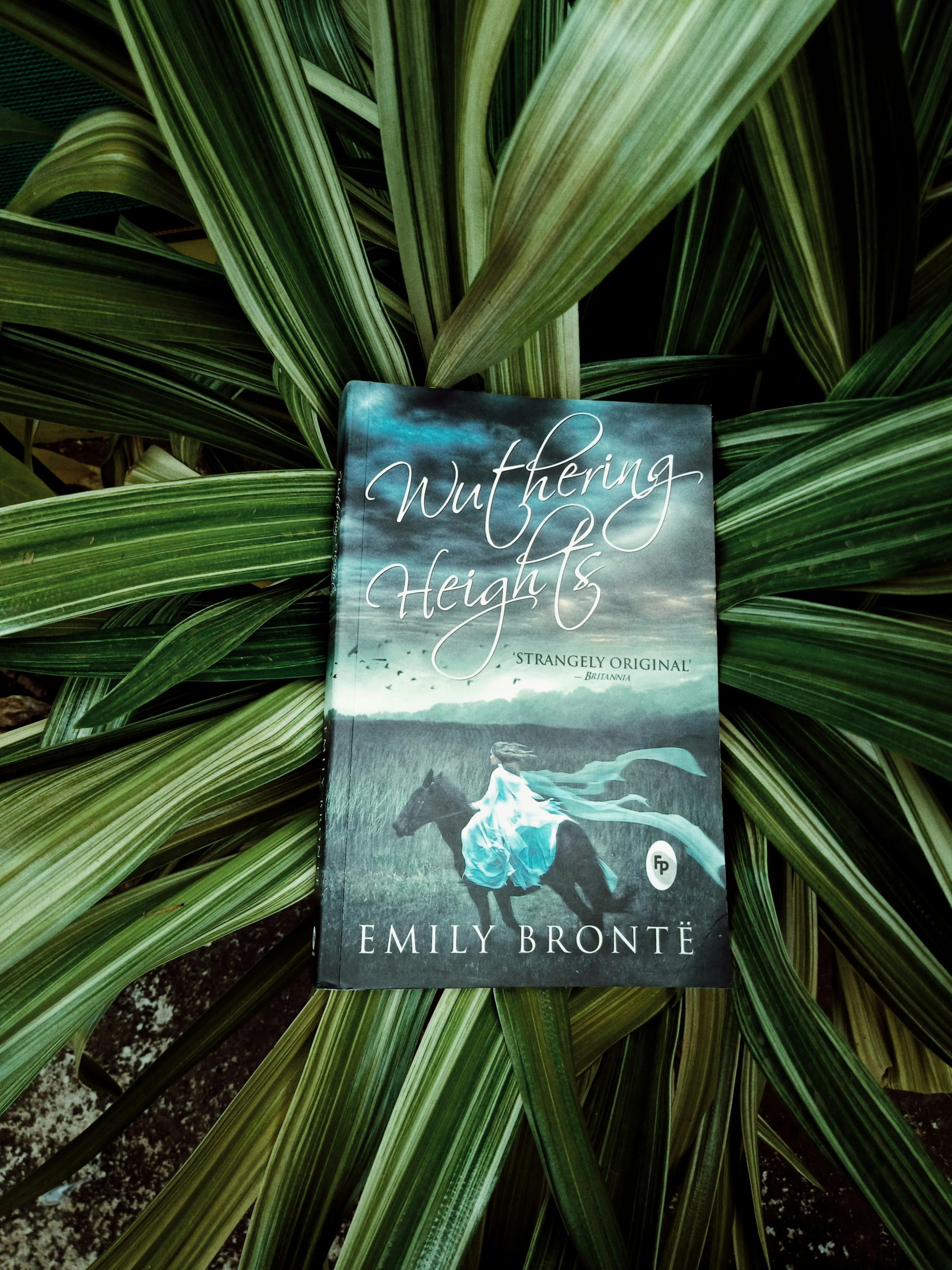
The original novel by Emily Brontë is not a love story, so much as it is an exploration of the dangers of obsession and unhealthy attachment. Heathcliff and Cathy’s relationship may be as “eternal as the rocks beneath” the craggy Yorkshire moors, or a bond forged through childhood reliance, but the crucial mistake Emerald Fennel makes in her adaptation is to overlook the implications of this bond and its effects on their own destruction of the self and towards others. Both characters burn their entire lives down because of conflicts in their relationship.
This is not a healthy love. It is disrespectful not only to the source material, but also to our own intelligence to suggest that we should view it as ‘the greatest love story of all time’.
What is even more disrespectful and degrading to the source material is how Fennell presents Wuthering Heights as exploration of the lustful, Byronic hero, setting Heathcliff alongside the likes ofDracula or Eric from the Phantom of the Opera. There is a crucial difference between Heathcliff and the aforementioned. Yes, he is violent and prone to dramatic mood swings, but his ‘love’ for Cathy and their relationship is not driven by physical touch in the novel. Heathcliff rather shares a spiritual, almost supernatural connection with Cathy. He is not driven by lust or sexual desire. Fennell’s characterisation however disregards this aspect and instead favours her Saltburn style aestheticism. Margot Robbie and Jacob Elordi spend more time dancing around each other than taking the time to properly explore their friendship and bond as adults. It does not make sense to me that Heathcliff and Cathy had not explored their feelings for each other before, as they both seem to be in their mid 20’s in this adaptation.
“Whatever our souls are made of, his and mine are the same” is the most notable line from Brontë’s novel for a reason.
Furthermore, Fennell’s choice to cast Jacob Elordi as Heathcliff is a complete misjudgement of who he is. Heathcliff is described as plucked from “the streets of Liverpool” with a “dark skinned” appearance. Brontë’s reference to Liverpool, to me, strongly suggests her intention for Heathcliff to be an orphan because of Liverpool’s slave trade in the late 18th century. His race is crucial to his arc; an outsider to the Earnshaw family who is never fully accepted because of his background. Instead of challenging racial prejudices through introducing an adaptation of Wuthering Heights that takes the subject of Hearhcliff’s race seriously (as many former adaptations have disregarded this topic and cast white actors), Fennell instead gives into them, and ends up dismissing the most fundamental part of Heathcliff’s character and therefore the overall novel. Her choice is reductive: Heathcliff’s treatment as the outsider and his arc do not make sense without the racial power dynamics at play in the novel.
I was also left feeling a pit of uncomfortable dread towards the portrayal of Isabella Linton. From literal ‘puppy play’ to sexual abuse, Isabella is painted as a participant in her own assault. Again, a misreading of a character from the novel. Brontë’s Isabella blindly trusts her marriage to Heathcliff, hoping for love and companionship. She is not stupid but rather naive, acting as a literary vehicle for how upper-class women were controlled by the men in their lives without choice. Therefore, to depict Isabella as a participant in her own erasure is insulting to the purpose of her character. It is unforgivable to portray Isabella as rather compliant in her abuse. What initially served as a symbol of hope for women in toxic marriages is completely absent in Fennell’s film, and the implication that she is compliant in her own abuse is damaging to women’s perceptions of relationships and romance, as well as an inaccuracy to the novel and Brontë’s intentions.
Overall, even if Fennell had done “Wuthering Heights” justice in her adaptation, we should not be mistaking Emily Bronte’s novel for ‘the greatest love story of all time’. Heathcliff and Cathy are both selfish and cruel.
These are not the ‘chains of love’; these are the chains of blind lust and obsession.
