

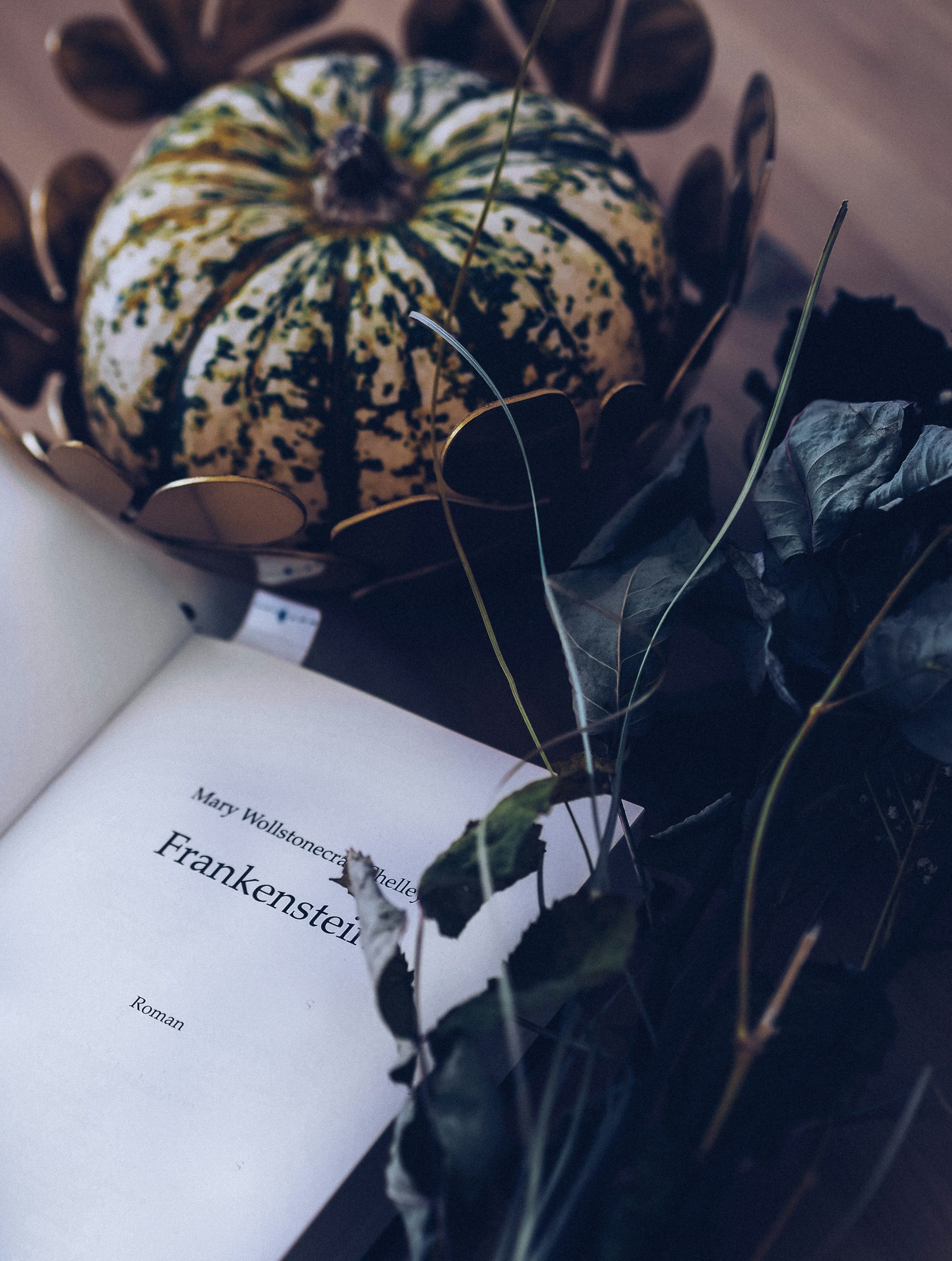
It was far too late on a Tuesday night when I settled down to watch Frankenstein (2025) on Netflix, a movie I can tell you now, I recommend highly. Though the two and a half hours sent me way past my bedtime, I enjoyed every second of it. Directed by Guillermo del Toro and paired with a haunting musical score by Alexandre Desplat, the movie is a retelling of one of my favourite books, Mary Shelley’s novel, Frankenstein: The Modern Prometheus.
Frankenstein at its core is a story of grief. Inspired by Mary Shelley’s own loss of her infant daughter, Clara, born two months premature. It is a novel centred around the stages of grief that shaped her life from that moment forward. Shelley is both the monster and the creator. Much like Victor she brought a fragile life into the world just for it to suffer and stated she dreamt bittersweet dreams of bringing her daughter back to life through light and warmth. But much like the creature, she suffered through grief, angry at God for allowing her to live through such pain.
Guillermo del Toro captures the heart of this story perfectly by taking the audience back to Victor’s childhood. Here we see glimpses of the man he’ll become, flashing out like sunlight on shattered glass through the scenes with his father. The cane his father used to hit Victor becomes the iron rod Victor uses against the creature. Victors’ hatred for his father becomes the creature’s anger. The man becomes the monster.
Here we are also introduced to Victor’s mother, first shown adorned all in blood red fabric, flowing in the wind like blood pooling in water. The costumes design throughout this movie were stunning, made by Kate Hawley, a costume designer from New Zealand who worked for Peter Jackson on The Lovely Bones and The Hobbit: An Unexpected Journey and with Guillermo Del Toro on Pacific Rim and Crimson Peak. Her work on both Victor’s mother’s and Elizabeth’s dresses particularly caught my interest, the avant-garde design popping off the screen. Both characters were played by Mia Goth, although the makeup department worked wonders to differentiate them, still the uncanny similarities linger, adding dark tones to Victor’s later obsession with Elizabeth. After his mother’s death, red fabric accompanies Victor in all scenes, his red gloves a reference to her last bloody handprint.
As the movie delved into gory anatomical dissections, slit skin, torn tendons and exposed muscles, I was pleasantly surprised by the movies bold decision to not display the scientific elements of this tale. The visual highlight however had to be the creature. It took approximately 10 to 11 hours for actor Jacob Elordi to transform. 42 different prosthetics, only the tip of his nose, upper lip and chin are his actual features. Even through the latex his performance is chilling, he captures the pure childish innocence of the creature, and later its hardened hurt.
Victor was obsessed with death, but once his pursuit was reached, he had no idea what to do with the life he’d created. In contrast, Elizabeth was obsessed with life, even as small as a butterfly. In the creature she sees that life and nurtures it. As Victor becomes his father, Elizabeth becomes his mother.
From Victor’s story blooms another, and we get to see it through the creature’s eyes. These moments feel slower than Victors crazed mission as we watch the creature learn and grow from a child to a man, shaped by the unforgiving world is creator left him in. In the end its only Victor and his creature, left to reconcile. After everything, all the creature can do now is live, and as he stares at the sun, the ending feels painful but hopeful. After all, at the centre of Frankenstein is Mary Shelley’s love for her daughter. What is grief if not love persevering?
